


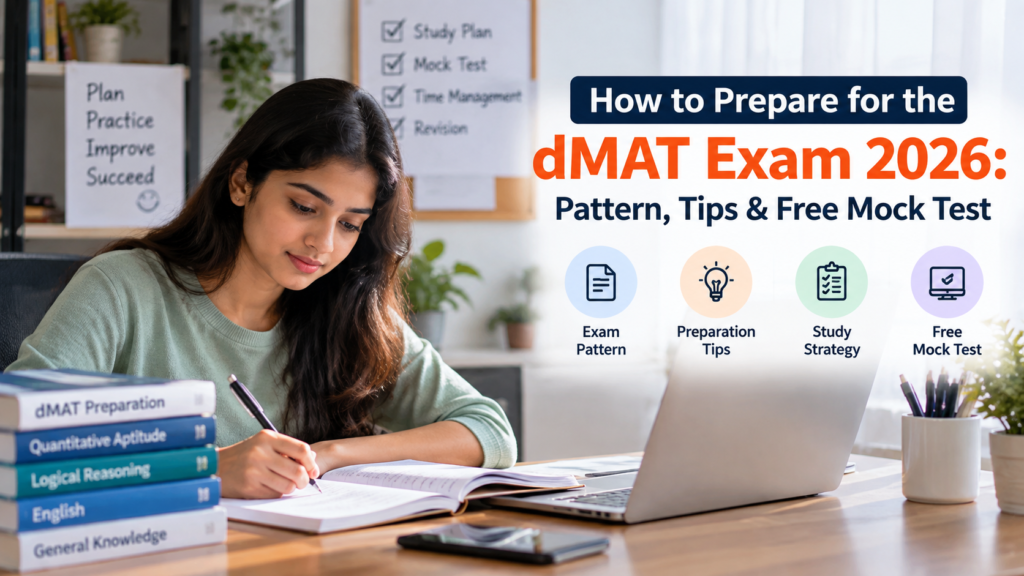
Preparing for the dMAT Exam 2026 is an important step for students planning to pursue a master’s degree in Germany. As competition for admissions continues to grow, a well-planned preparation strategy can help you become familiar with the exam, improve your confidence, and maximize your performance.
Unlike many entrance exams, success in the dMAT is not just about studying harder—it’s about studying smarter. Building a consistent routine, practicing regularly, reviewing your progress, and understanding your strengths and weaknesses can make a significant difference.
Whether you’re a student from Vadodara, Gujarat, or anywhere else in India, starting your preparation early gives you enough time to develop the skills required for the Germany Masters Entrance Exam.
This guide shares practical preparation strategies, study techniques, and mock test tips to help you prepare effectively for the dMAT Exam 2026.
Start Your dMAT Preparation the Right Way
One of the biggest mistakes students make is beginning their preparation without a clear roadmap. Instead of jumping directly into practice questions, spend some time understanding the exam structure and identifying the skills you need to improve.
Start by becoming familiar with the overall exam format and creating realistic study goals. Breaking your preparation into manageable milestones makes the process less overwhelming and helps maintain consistency over several weeks.
Remember that steady progress is more effective than trying to study everything in a short period.
Create a Realistic Study Timeline
Preparing for the dMAT becomes easier when you divide your preparation into phases.
Phase 1: Build Your Foundation
Spend the initial weeks understanding different question types and identifying areas where you need the most improvement. Focus on learning concepts instead of worrying about speed.
Phase 2: Strengthen Your Skills
Once you’re comfortable with the basics, begin solving practice questions regularly. This stage should focus on improving accuracy while gradually increasing your speed.
Phase 3: Test and Refine
In the final stage, concentrate on solving full-length mock tests, reviewing mistakes, and refining your exam strategy. This helps simulate real exam conditions and improves confidence before the actual test.
Weekly Study Strategy
A structured weekly routine helps maintain consistency without causing burnout.
A balanced study schedule should include concept revision, topic-wise practice, timed question-solving, and regular mock tests. It is equally important to dedicate time each week to reviewing mistakes and understanding why incorrect answers occurred.
Taking one day each week for revision rather than learning new concepts can significantly improve long-term retention.
Consistency matters far more than studying for long hours on a single day.
Time Management During Preparation
Time management plays a major role in How to Prepare for dMAT Exam 2026 successfully.
Many students spend too much time on topics they already know while neglecting weaker areas. Instead, allocate study time based on your performance. Prioritize difficult sections early in your preparation and revisit them regularly.
During practice sessions, set time limits for solving questions. This develops the habit of working efficiently and prepares you for the pace of the actual examination.
Avoid studying continuously for several hours without breaks. Short, focused study sessions are generally more productive than marathon study periods.
Preparation Tips to Improve Your Performance
Small improvements in your daily study habits can have a significant impact over time.
Some effective preparation tips include:
- Study consistently instead of cramming before the exam.
- Focus on accuracy before attempting to increase speed.
- Review incorrect answers carefully after every practice session.
- Maintain short notes for quick revision.
- Track your progress every week.
- Practice under timed conditions regularly.
Developing these habits early makes your preparation more structured and measurable.
How to Improve Your dMAT Score
Improving your score is not only about solving more questions—it’s about solving them intelligently.
After every practice session, spend time analyzing your performance. Identify recurring mistakes, weak concepts, and questions that consume too much time. This analysis helps you understand where improvements are needed.
As your preparation progresses, compare your scores over multiple practice tests rather than focusing on individual results. Consistent improvement is a better indicator of readiness than a single high score.
Common Mistakes Students Should Avoid
Many students unknowingly reduce their performance by making avoidable mistakes during preparation.
Some common errors include skipping regular revision, taking very few mock tests, ignoring weaker topics, studying without a timetable, and focusing only on theory without sufficient practice.
Another frequent mistake is becoming discouraged after scoring poorly in early mock exams. Practice tests are designed to identify weaknesses—not to judge your final performance. Every mock test provides valuable learning opportunities.
Why Mock Tests Are Essential
Mock tests are one of the most valuable resources for dMAT Preparation because they simulate the actual exam experience.
They help students become comfortable with time limits, improve decision-making, and reduce exam anxiety. More importantly, mock tests reveal patterns in your performance that may not be visible during regular study sessions.
Benefits of solving mock tests include:
- Better time management.
- Increased confidence.
- Improved question-solving speed.
- Identification of weak topics.
- Realistic exam experience.
Regular mock testing also helps students develop effective strategies for handling pressure during the actual examination.
Build a Strong Revision Strategy
Revision should be an ongoing process rather than something saved for the final week.
Review important concepts regularly, revisit previously solved questions, and maintain concise notes that can be read quickly before the exam. Revising frequently helps reinforce concepts and prevents forgetting material learned earlier.
Instead of trying to learn new topics at the last minute, use the final days before the exam to strengthen what you already know.
Exam-Day Preparation Tips
Preparing for exam day is just as important as preparing for the exam itself.
Get adequate sleep before the examination, reach the test center or log in well before the reporting time, and avoid learning entirely new concepts at the last moment. Stay calm, read every question carefully, and manage your time wisely throughout the exam.
A confident and composed mindset often leads to better decision-making during the test.
Practice Smarter with Edmaster
Regular practice is one of the most effective ways to prepare for the dMAT Exam 2026.
Edmaster’s dMAT Practice Portal is designed for students who want structured self-preparation through online learning resources. The platform enables students to practice consistently while tracking their progress over time.
Features include:
- Topic-wise practice questions
- Online mock tests
- Performance analytics
- Progress tracking
- Self-assessment tools
These resources help students understand their strengths, identify improvement areas, and build confidence through continuous practice.
Suggested Internal Links
- dMAT Practice Portal
- dMAT Mock Tests
- Topic-wise Practice Questions
- Study in Germany Resources
- Germany Master’s Admission Guide
Conclusion
Preparing for the dMAT Exam 2026 requires consistency, planning, and regular self-evaluation. Instead of relying on last-minute preparation, students should build a structured study routine that includes concept learning, practice sessions, mock tests, revision, and performance analysis.
For students across India, including Vadodara, disciplined preparation can make the journey toward Germany’s master’s admissions much smoother.
If you’re ready to begin your preparation, explore Edmaster‘s dMAT Practice Portal to access topic-wise practice questions, online mock tests, performance analytics, and progress tracking that support effective self-learning.
Frequently Asked Questions:
Start by understanding the exam structure, creating a realistic study schedule, and practicing consistently with topic-wise questions before attempting full-length mock tests.
The ideal number varies for each student, but taking regular mock tests throughout your preparation helps improve time management, accuracy, and confidence.
Focus on consistent practice, review your mistakes after every test, strengthen weak areas, and track your progress through regular self-assessment.
Common mistakes include irregular study schedules, skipping revision, avoiding mock tests, ignoring weaker topics, and failing to analyze test performance.
Practice questions, online mock tests, performance analytics, progress tracking, and structured self-assessment tools are among the most effective resources for preparing for the dMAT Exam 2026.