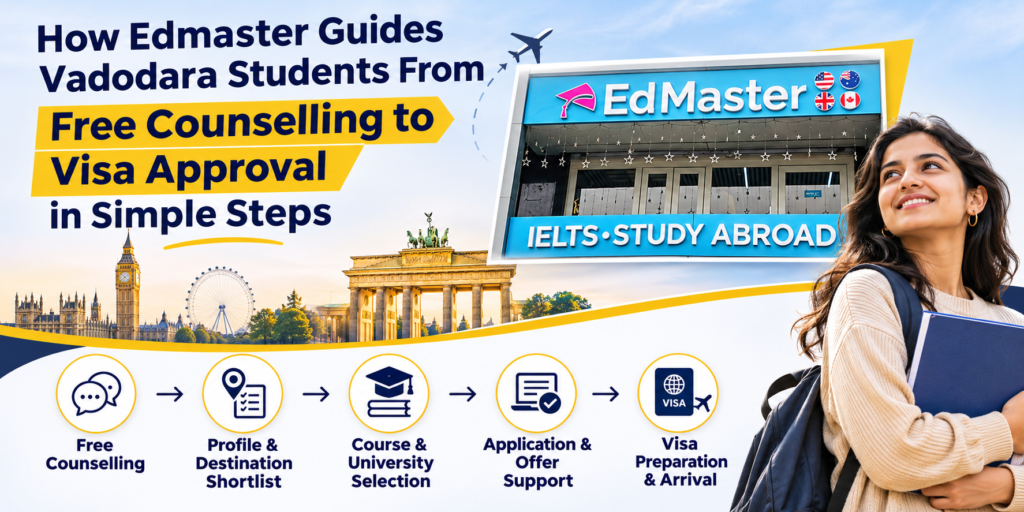
Planning to study overseas can feel complicated when course selection, entry requirements, documents, budgets and visa rules all need attention at the same time. Students in Vadodara often begin with a broad goal—such as studying in the UK or Germany—but need a practical plan to turn that goal into an application. Edmaster aims to make the process easier to understand by helping students break it into manageable steps. Counselling is a starting point for planning, not a promise of admission or visa approval.
Step 1: Start with a counselling discussion
The first conversation should help clarify what you want to study, why you want to study abroad and what constraints matter most. Be ready to discuss your education, grades, work experience if relevant, preferred intake, budget, language ability and career interests. If you are undecided between countries, explain what matters to you—cost, course structure, language, location or post-study opportunities. The more accurate the information you share, the more useful the initial guidance can be.
Step 2: Assess your profile and shortlist destinations
A course that suits one student may not suit another. Your academic background, prerequisites, budget and career plans should guide the destination shortlist. For the UK, students should compare programme duration, tuition, scholarship options and current immigration rules. For Germany, students should check the recognition of previous qualifications, language of instruction, APS requirements where applicable and financial proof. No country should be selected solely because someone says it is “easy” or “free.”
Step 3: Compare universities and courses
Once your target is clearer, compare curriculum, entry requirements, location, tuition, living expenses, internship opportunities and graduate outcomes where reliable information is available. Review the official course page rather than relying only on rankings or promotional claims. Check application deadlines and whether a course requires a portfolio, entrance test, interview or additional subject knowledge. Keep a balanced shortlist with ambitious, realistic and alternative options.
Step 4: Prepare a strong application
Application documents may include academic transcripts, certificates, a CV, statement of purpose or motivation letter, references, language-test results and passport details. The exact list depends on the institution and course. Your statement should explain why the programme fits your background and future plans. Avoid generic essays that could be submitted to any university. Check spelling, dates, names and document translations before submission, and retain a copy of the final application.
Step 5: Track offers, conditions and next actions
After submission, monitor email and application portals for decisions or requests for additional evidence. Read offer conditions carefully. You may need to submit final results, prove language proficiency, pay a deposit or provide other documents by a specified date. Keep a tracker with each university, login location, deadline, offer status and outstanding action. If you receive more than one offer, compare the full cost and course fit rather than deciding only on the institution’s name.
Step 6: Prepare for visa requirements
Visa preparation should begin with the official checklist for the destination and applicant category. UK applicants should check current Student visa guidance, financial evidence rules, Confirmation of Acceptance for Studies requirements and any applicable health-related charges or other steps. Germany applicants should check the responsible mission’s instructions, APS requirements where applicable, accepted financial proof, insurance and appointment process. Rules and amounts can change; confirm them at the time of application. A consultant can help organise documents, but the final decision is made by the relevant authority.
Step 7: Plan travel and arrival
Once a visa is granted, check its validity and entry conditions before making travel arrangements. Organise accommodation, insurance, tuition payment arrangements and a realistic arrival budget. Keep important documents accessible and follow local registration or enrollment steps after arrival. A pre-departure checklist can reduce last-minute confusion, especially for students travelling internationally for the first time.
How Edmaster supports students
Edmaster provides study-abroad guidance for students from Vadodara and across India, with a focus on helping them understand options and organise the process. For students considering Germany, support may include navigating admission-related steps and identifying where APS or other official requirements need to be checked. Edmaster also offers a dMAT Practice Portal for students who want to practise for the dMAT; it should be understood as a practice resource, not a guarantee of admission. Ask the team to confirm the current services, inclusions and fees relevant to your case.
What students should remember
No process can remove every uncertainty. Universities may reject applications, scholarship decisions are competitive and visa approval is not guaranteed. The best preparation combines accurate information, realistic budgeting, timely document collection and active involvement by the student. You should understand every application submitted in your name and verify important information using official sources.
Conclusion
From the first counselling discussion to visa preparation, the study-abroad journey becomes more manageable when each stage has a clear next step. Start early, compare courses carefully and keep your documents organised. Edmaster can help Vadodara students approach the process with a plan while official universities and immigration authorities retain responsibility for their decisions.
Prepare for the first counselling meeting
To make an initial counselling meeting more productive, prepare a short profile summary before you attend. Include your latest marks, degree subject, graduation year, English or German language status, preferred intake and an approximate budget. List two or three courses or career directions that interest you, even if you are not certain about the destination. Write down questions about fees, application timelines, services included and what you must complete independently. If a consultant suggests a route that seems too expensive or does not match your background, ask for alternatives and the reason behind the recommendation. The meeting should leave you with practical next steps and a clearer understanding of your choices.
Frequently Asked Questions:
Ask Edmaster to confirm the current counselling offer and any conditions before booking. Get any paid service scope and fees in writing.
No. Admission decisions belong to universities and visa decisions belong to government authorities.
Edmaster provides Germany admission-related guidance. Confirm the exact services available for your profile and intake directly with the team.
Bring available transcripts, certificates, a passport if you have one, language scores, a CV and a rough budget. The initial discussion can identify what is missing.
Edmaster offers a dMAT Practice Portal rather than dMAT coaching. Confirm the portal features and access terms directly with Edmaster.