
A successful study-abroad application is rarely a single task. It is a sequence of decisions, documents and deadlines that must fit together. Students planning to study in the UK or Germany can reduce confusion by understanding the process before they start paying application fees or making travel plans. Edmaster helps students from Vadodara and elsewhere in India organise the journey into clear stages, while universities and government authorities remain responsible for admissions and visa decisions.
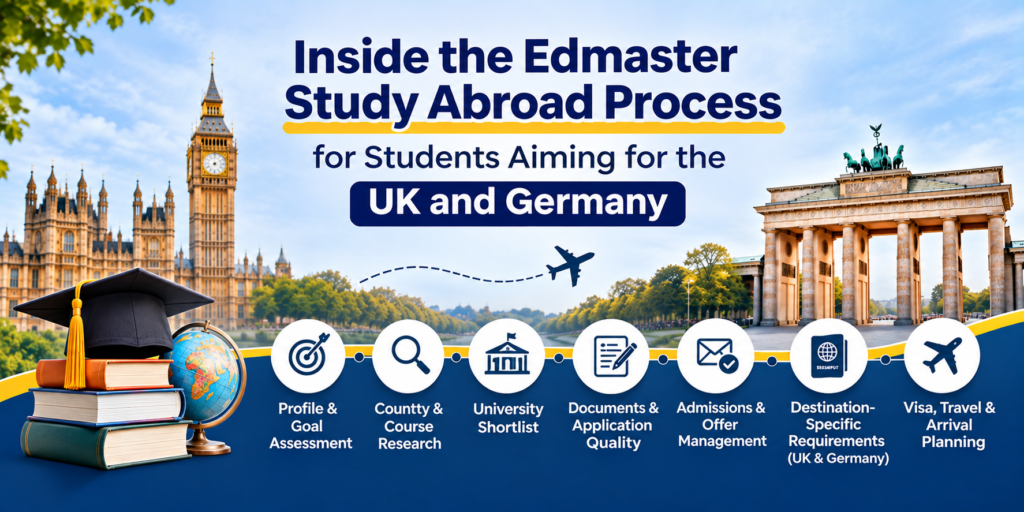
Stage 1: Profile and goal assessment
The process begins with a realistic view of the student’s profile. Academic history, subject interests, grades, work experience, language ability, budget and preferred intake all influence suitable options. Students should also think about what they want after graduation: a specific profession, further research, an international experience or a qualification that supports their career in India. Clear goals make course selection more meaningful and help students explain their motivation in applications.
Stage 2: Country and course research
The UK and Germany have different education systems and application considerations. UK applicants should compare course duration, tuition, city-level living costs, scholarship options and current visa rules. Germany applicants should check whether programmes are taught in English or German, whether their previous qualification meets entry requirements, and whether APS verification applies. Students should not choose a destination based on a single headline such as “free education” or “easy visa.” Total cost and eligibility matter.
Stage 3: University shortlist
Build a shortlist using official university pages. Compare course content, entry criteria, language scores, deadlines, application fees, internship options and support services. Check whether applications are made directly or through a centralised system. Keep a mix of options where possible, but avoid applying to programmes that do not genuinely fit your profile. A shortlist should be manageable enough that every application can be tailored properly.
Stage 4: Documents and application quality
Common documents include academic transcripts, certificates, passport details, CV, statement of purpose or motivation letter, references and language-test evidence. Some courses may require portfolios, interviews or entrance assessments. Use consistent names and dates across all forms. Your statement should show a clear connection between previous study, course choice and future plans. Avoid copying generic statements or exaggerating achievements. Submit accurate documents and retain confirmation emails.
Stage 5: Admissions and offer management
After submission, check your email and portals regularly. Universities may ask for additional documents, schedule an interview or issue a conditional offer. Record every condition and its deadline. If an offer requires final results, language evidence or a deposit, plan how to meet it. Compare offers by course quality and total cost, not only by brand name. Before accepting, understand the refund terms for deposits and the consequences if your plans change.
Stage 6: Destination-specific requirements
For Germany, Indian applicants should confirm APS requirements, application routes and accepted proof of finances through official channels. A blocked account is one possible financial-proof method, but the required amount and accepted alternatives can change. For the UK, students should check current Student visa guidance, Confirmation of Acceptance for Studies requirements, financial evidence and other relevant steps. Do not use a previous year’s checklist without confirming it is still current.
Stage 7: Visa, travel and arrival planning
Prepare the visa file using the official checklist for your category and location. Ensure your information is accurate and be prepared to explain your course choice and funding plan. Processing times are not guaranteed, so allow a sensible buffer. Once approval is received, check validity dates and entry conditions, then arrange accommodation, travel and initial expenses. After arrival, complete the enrolment and registration steps required in your destination.
How Edmaster fits into the process
Edmaster supports students in understanding their options and organising application-related steps for UK and Germany study plans. A student can use guidance to identify suitable courses, build a document checklist and track the next action. Students preparing for dMAT can also explore Edmaster’s dMAT Practice Portal, which is a practice resource rather than coaching or a guarantee of results. Ask Edmaster to confirm the exact service scope and costs relevant to your situation.
Keep ownership of your application
Students should remain active participants throughout the process. Use your own email where possible, save application copies, read every form before submission and understand any declaration you sign. Verify important information with official universities and government websites. A clear tracker with deadlines, fees, application status and outstanding documents can prevent avoidable mistakes.
Conclusion
The UK and Germany study-abroad process becomes easier to manage when it is broken into stages: profile assessment, research, shortlisting, documents, applications, offers and visa preparation. Start early, check official requirements and ask questions whenever something is unclear. Edmaster can help Vadodara students bring structure to the process while keeping each decision grounded in accurate information.
Use a tracker to manage applications
A simple application tracker is one of the most useful tools for applicants managing multiple universities. Include the programme name, official application link, deadline, fee, documents required, submission date, application reference, offer conditions and next action. Add separate entries for scholarships, language tests, APS and visa milestones where relevant. Review the tracker weekly and set reminders well before deadlines. Save submitted forms and confirmation emails in clearly labelled folders. This helps you avoid confusing the requirements of different universities and makes it easier to discuss progress with an adviser or family member. Never assume an application is complete until the portal or institution confirms receipt.
Frequently Asked Questions:
Start by assessing your academic profile, course interests, budget, language ability and target intake before shortlisting destinations.
There is no universal number. Choose a manageable shortlist of programmes that genuinely fit your profile, budget and goals.
Yes. Requirements and application routes differ, including APS considerations for many Indian applicants to Germany and UK-specific visa steps.
No. Edmaster may help students organise preparation, but visa decisions are made by government authorities.
It is a practice resource for dMAT preparation. It is not dMAT coaching and does not guarantee test scores or admission.